


PUNK ROCK
- Gorillla Music Group
- Jul 8
- 2 min read

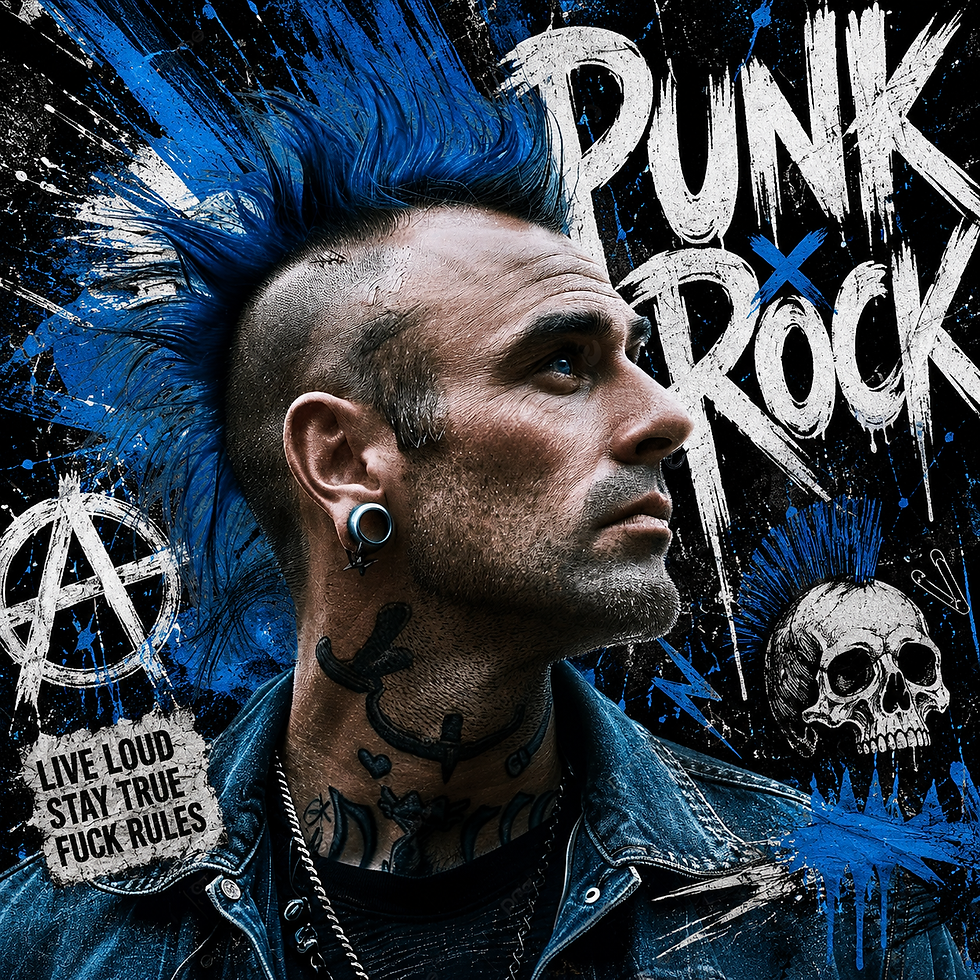
Punk rock has always been more than a music genre—it is an attitude rooted in independence, rebellion, and authenticity. Emerging in the mid-1970s, punk challenged the polished sound of mainstream rock with fast tempos, raw guitar riffs, stripped-down production, and lyrics that confronted politics, social issues, personal struggles, and everyday life. Bands like the Ramones, Sex Pistols, The Clash, Black Flag, Dead Kennedys, Bad Religion, and later Green Day, NOFX, Rancid, and The Offspring helped shape punk into a global movement that continues to influence generations of musicians.
Musically, punk has expanded into numerous subgenres, including hardcore punk, pop punk, skate punk, post-punk, anarcho-punk, crust punk, horror punk, Celtic punk, and melodic hardcore. Each branch has developed its own identity while maintaining the DIY spirit that defines punk culture.
Today, punk rock remains a vibrant underground force. While it may not dominate mainstream radio as it did during the 1990s and early 2000s, thousands of independent bands continue to release music through streaming platforms, social media, Bandcamp, and independent record labels. Festivals, local venues, and grassroots communities continue to keep the genre alive, proving that punk's strength has never depended solely on commercial success.
Looking ahead, the future of punk rock appears promising, though it will likely continue evolving rather than returning to its original form. Several trends are shaping its direction:
Greater blending with genres such as metalcore, hardcore, hip-hop, electronic music, and alternative rock.
Increased independence as artists rely less on major labels and more on direct-to-fan platforms.
Continued emphasis on authenticity over commercial appeal, a hallmark of punk since its inception.
Global growth, with thriving punk scenes emerging across Latin America, Europe, Asia, and Australia.
New generations discovering classic punk through streaming services while creating modern interpretations of the sound.
Artificial intelligence and digital production tools may also influence how punk music is recorded and distributed, but the genre's core identity will likely remain centered on human emotion, social commentary, and creative freedom. Punk has always adapted to changing times without abandoning its rebellious spirit.
Ultimately, punk rock's future may not be measured by chart positions but by its ability to inspire independent artists and give a voice to those who reject conformity. As long as musicians continue to value honesty, energy, and self-expression over trends, punk rock will remain a vital and influential force in music.


